
It's not cricket!
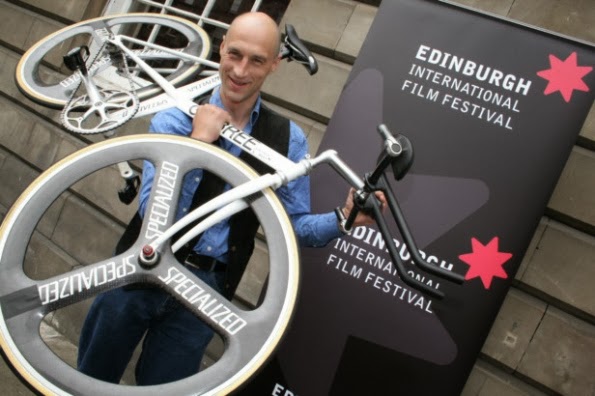 Look, lets stop fooling ourselves. The London and Edinburgh velodromes have both been sold off to developers — the London one, supposedly, to help pay for the Olympics. We have Chris Hoy because when he was developing in the sport there was a velodrome in Scotland for him to learn the ropes. Now there isn't — so where is the next Chris Hoy coming from?
There's someone else from Scotland who should have been winning medals for us at this Olympics. Jason McIntyre should have been doing for us in the man's time trial what Emma Pooley did so brilliantly in the women's. But Jason couldn't be there — because some careless motorist killed him while he was out training this spring (and was fined a derisory five hundred pounds in punishment).
Cycling doesn't have too much spent on it. Cycling doesn't have nearly enough spent on it. Every medium sized town has an Olympic size swimming pool. Every city has a running track. And we have one — count them, one — indoor velodrome in the whole country. In no other of our elite sports do we turn promising young athletes out onto the roads to battle it out with speeding motorists too busy with their mobile phones to pay attention to where they're going.
The spread of knowledge in a large game world
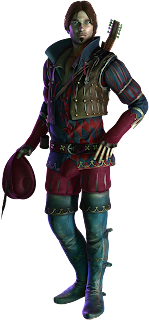
These days we have television, and news. But in a late bronze age world there are no broadcast media. News spreads by word of mouth. If non-player characters are to respond effectively to events in the world, knowledge has to spread.
How to model this?
Worlds and Flats
Of Compartmented Worlds
Playing The Witcher has got me thinking again about an algorithm for rendering a world which I first thought of twenty-five years ago. Then, it was a hack for dealing with the fact that the computers of the day didn't have much memory or horsepower. Now, it's a hack for dealing with the fact that — when considered against the complexity of a world — the computers of today still don't have enough memory and horsepower. Mind you, today I'm contemplating photorealistic scenes, whereas then simple line and wash would have been good enough, but...
The algorithm for rendering I'll call 'flats'. But before we get to discussing flats, lets discuss worlds. The world of The Witcher (and other games based on the Aurora engine) is composed of areas. One area is loaded into memory at a time; when the player reaches an area boundary, the area is unloaded in toto, and the next area loaded, also in toto. The result is a noticeable interruption in game play. There's also, normally, a noticeable visual disjunction at the boundary; the new area uses a different 'tileset', which is to say, set of bits of scenery. When you look across a boundary, the scenery often appears different from what you find when you cross the boundary and arrive at the other side.
The Witcher: Story telling of a high order
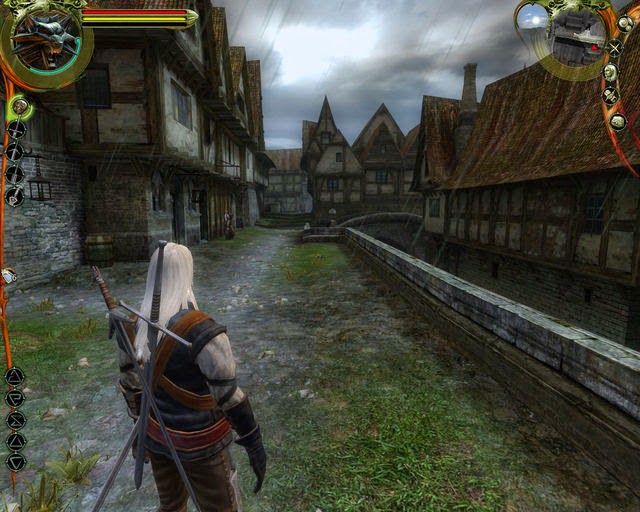
This isn't, by any means, a final review of The Witcher. I've played it fairly intensely over three weeks, and am only into the fourth chapter. Which is great, because there is more to come.
But, what do I think of the show so far?
The best wee act of hegemony in the world
 We're all familiar with Jack McConnell's slogan for Scotland's airports. We're all familiar with the incoming nationalist government's dislike of it, and rapid deletion of it. But Jack McConnell must be laughing up his sleeve; we, the nationalists, have missed a trick — badly — and Jack has achieved all he set out to achieve.
Because we didn't challenge the truth of the slogan; we didn't notice that it needed to be challenged. So the idea — the meme — the hegemonic masterstroke that McConnell set out to achieve has been achieved. We have cast our national debate in terms of being a small nation. If you went out in any street in Scotland and asked ten passers by whether Scotland was a big country, a middle sized country, or a small country, all ten would agree, Scotland is 'wee'.
We like the notion. It's romantic, the small band against the world. Our national myth — our stories of Wallace and Bruce are cast as the brave few against the might of a much more powerful hostile world. And so we let it pass unchallenged, and thus give an unnecessary gift to the unionists. Like James the Fourth at Flodden Field, we march down off the strong hill to face our opponents on their territory.