By: Simon Brooke :: 22 January 2026
The Trouble with Tents
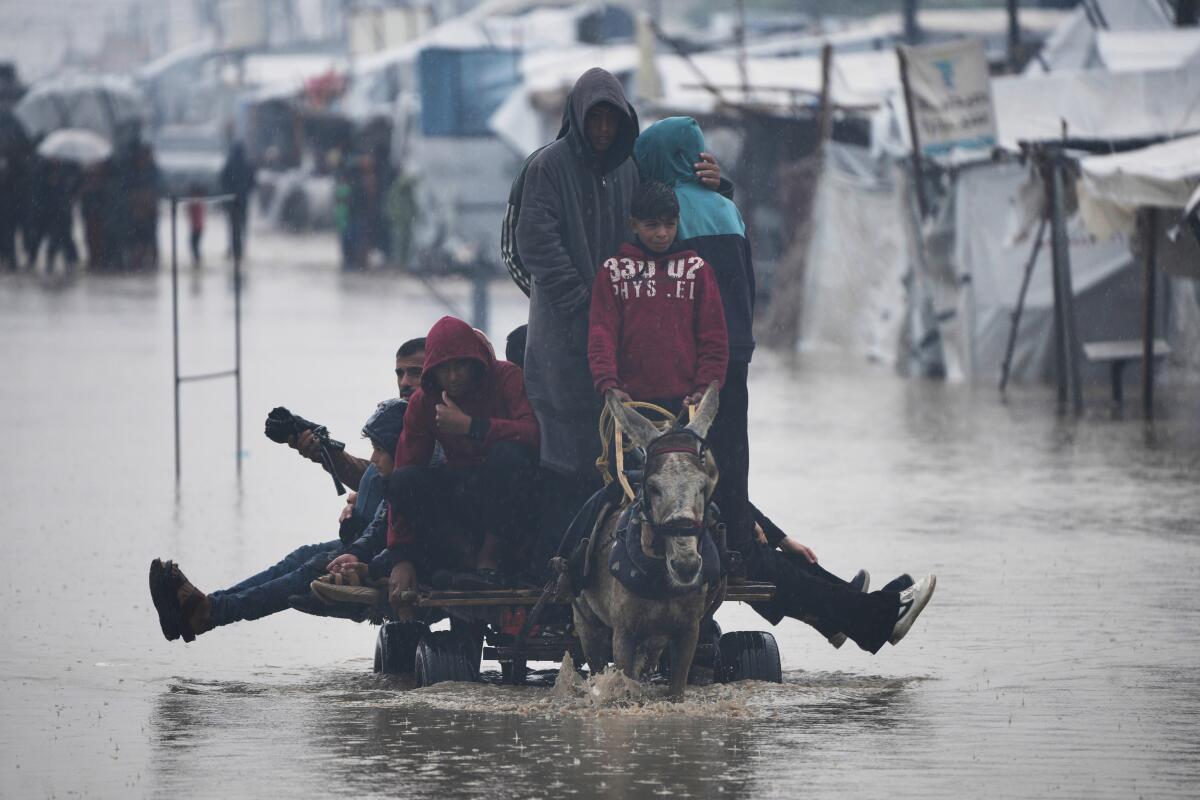
It's obvious that something has gone badly wrong with the supply of tents to Gaza. Many of the tents that have been supplied are not standing up to the weather.
In three weeks in December, according to UNWRA
more than 42,000 tents or makeshift shelters are estimated to have sustained full or partial damage
This is out of an estimated 90,000 tents that have arrived in Gaza over the past two years, according to the Guardian.
So that's roughly half of all the tents in Gaza substantially damaged in a single month.
The Palestine Shelter Cluster, a UN organisation, estimates
over a million people displaced and living in makeshift sites, damaged buildings, tents, and overcrowded shelters, many of which are in coastal areas repeatedly exposed to water inundation...
The same document reports
In several areas, entire shelter sites were completely flooded due to inadequate drainage and low-lying terrain, while sub-standard or non-weatherproof tents became saturated, rendering them uninhabitable.
It gives its 'key message'
Tents cannot serve as the primary and sole shelter modality in Gaza, as they provide only temporary cover. The latest winter storm showed that impacts were driven not only by tent limitations, but also by compounding factors including sub-standard specifications, prolonged overuse, inadequate anchoring, overcrowding, lack of shelter materials to undertake necessary adjustments, and critically unplanned sites with unstable ground, poor or absent drainage...
So what's the problem?
The Tents
Full disclosure: I have experience in living under just a tarpaulin. I have experience of surviving storms under just a tarpaulin. Few people in the west have. So I can imagine and understand the present experience of people in Gaza in a way few in the west can.
It's clear that there are real technical problems with some of the tents. The Guardian article I quoted earlier cites several countries which, it alleges, have supplied sub-standard tents:
"The fabric [of tents from one country] tears easily as sewing quality is poor,” [the Palestine Shelter Cluster] reported. “The fabric is not waterproof. Other issues include small windows, weak structure, no flooring, the roof collects water due to the design of the tent, and no mesh for openings...
Tents from [another country] were criticised as having “non-waterproof light fabric, weak structure” and tents donated by [a third] were “very light” and not waterproof.
The Guardian is quoting here from this document from the Palestine Shelter Cluster website, which is worth reading in its entirety. The document criticises all the designs of tents which have been supplied to Gaza except this one, which it describes as
Highly preferred by the people, it is waterproof, better structure stability, better design to use the inner space, good height, good ventilation, easy to install, transport, limited warehousing space is needed.
So: why have many countries and agencies been supplying less-preferred designs of tents? Disaster relief has been happening in places around the world, including in places with climatic and ground conditions similar to Palestine, for at least a hundred years.
There are three possible reasons I can see:
- Countries or agencies have tents in stock designed for less harsh conditions, and supply these from stock because they are what can be delivered quickly and cheaply;
- Politicians want to be able to announce a large number of tents, but are unwilling to allocate large sums of money; so civil servants or others seeking to square that circle specify and purchase cheaper, less adequate, tents;
- Decision makers have not given enough thought to, or are too privileged to be aware of, the problems of living in inadequate shelter.
There is a final thought here. No one wants tents to be the permanent shelter for the Palestinian people. People of good will everywhere want to see decent homes rebuilt in Palestine to house the whole of its population well. There may be a feeling that, by supplying adequate tents, we might reduce the pressure on the 'warring parties' to come to a full and final peace settlement.
But that is naïve. The current Israeli government has both said and demonstrated that its goal is the complete erasure of the Palestinian people. Increasing the stress on Palestinian civilians places absolutely no pressure on Israel to make peace; rather the contrary. Unless the international community is prepared to face Israel down, jail its current leaders, and establish robust security for the Palestinian people, either as full citizens alongside Jews in a single unitary secular state 'from the river to the sea', or else in a Palestinian state restored to its 1966 borders and with full membership either of NATO or of the European Union, there can be no peace.
In the meantime, the tents are inadequate, although some (it appears a small minority) are better than others.
But tents alone are not the problem.
The Sites
Gaza is a land which has been civilised — the home of people who lived in cities, with complex economies and systems of government — for 5,000 years. It's extremely compact: 40 Km long, less than (in my home region) the distance from Dumfries to Kirkcudbright, by 12 Km wide, less than the distance between the A75 road and the sea.
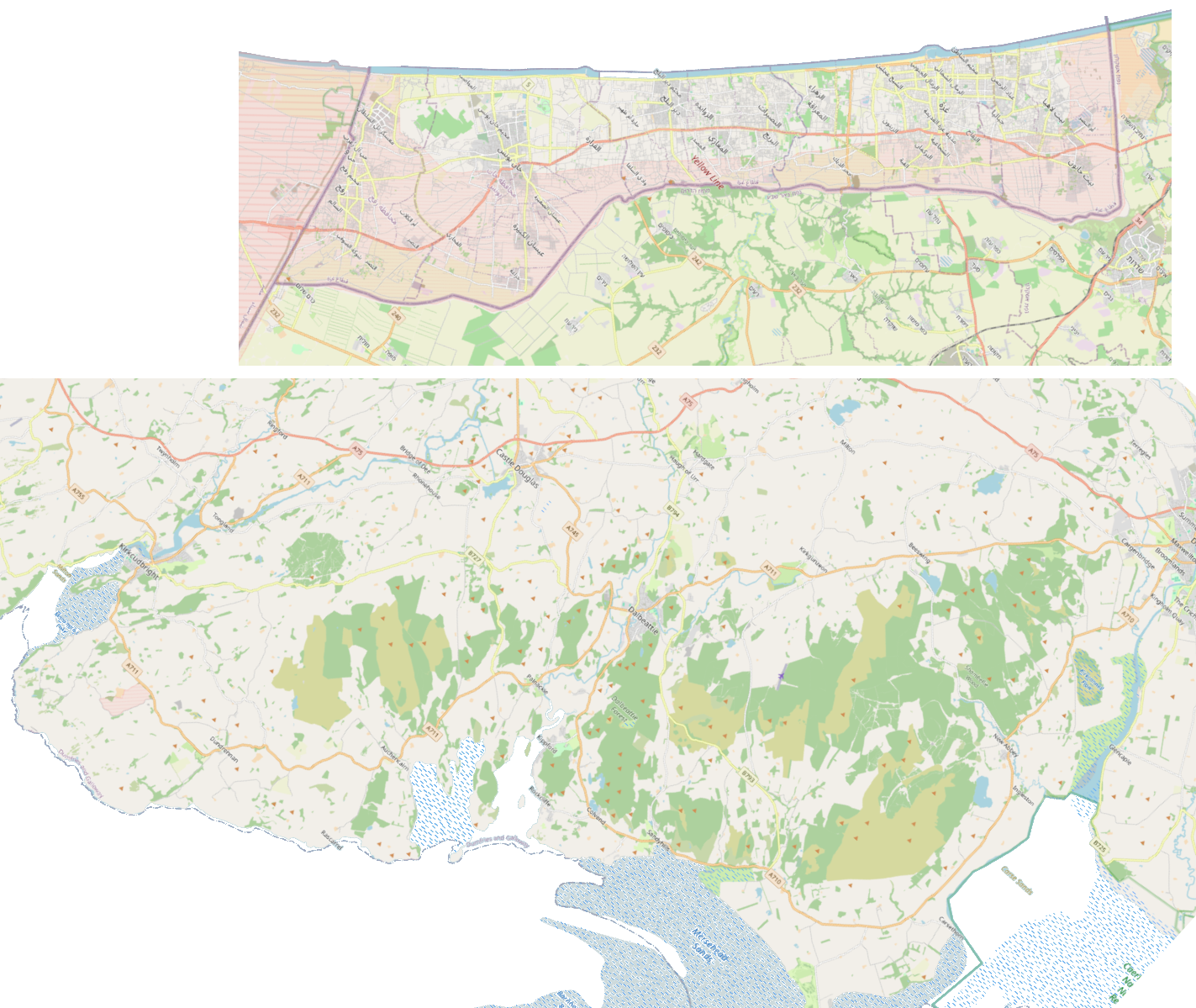
In that area, they have 2.3 million people; in a similar area, we have fewer than 50,000.
So it's inevitable that every bit of land in Gaza which is suitable for building on — which had adequate drainage to build on — already had been built on, before the ongoing genocide began. But since then, the Israeli army has driven people out of more than half of that area.
And it seems to me that they are systematically driving displaced Palestinian families down onto the lowest ground, closest to the sea, most vulnerable to floods.
I have people who I give to in Gaza; I write to them, and they write to me, and so I begin to get some idea of how they live.
Food is extremely expensive — many staples are five or ten times as expensive as they are in the UK. Safe cooking fuel is virtually unobtainable, leading to women cooking on fires of plastic waste which gives off toxic fumes. The overcrowding is intense, with families living in tents crammed up against one another.
The weather in Gaza is not 'bad' by Scottish standards. Now, in winter, their temperatures are like ours in summer; the rainfall is much less than we are used to, and even their winds are less fierce.
But we (mostly) have good, secure houses, and plentiful food. And we wear clothes adapted to our climate — as the Norwegians, who live in an even starker climate than ours, say, 'there is no such thing as bad weather, only the wrong clothes.'
But the thing is, almost everyone in Gaza has been driven out of their homes — by bombing, by shelling, by threats — not once, but multiple times. Each time they have been forced to move on, they've been able to salvage less and less from the wreck.
If you're bombed out of your home in summer, do you wait to make sure you've packed your winter clothes before you flee? No, of course you don't.
So, my friends in Gaza — single mothers, mostly, because they seem to me most vulnerable — are living in inadequate tents, crowded together on beaches prone to flooding, unable to adequately feed their families, struggling to afford medicine, without even the clothes they would normally wear in a Gazan winter.
It's inevitable that epidemic diseases will spread in this crowded, cold, malnourished population. It's by design. It's genocide.
Children will die this winter in those tents. This is not by accident; this is not 'sad'. This is a deliberate crime, a crime of genocide being committed by a government — the Israeli government — which our government is not doing nearly enough to condemn.
Do not let those dead children include Bara'a's only surviving child, Ibrahim. Do not let them include Rania's youngest, Kinda. Do not let them include any of Islam's three children.
If you can give, please give. The people I've named are people I know, whom I've corresponded with, and whose need hurts my heart; but the gazaverified project has interviewed and verified many more families, all of whom are also in need.
But whether you can give or not, please write to your MP (or other political representative) and get your government to put pressure on Israel.
We should not allow children to pawns in this war.
Tags: Peace, Politics