The City of Tents 🏕️💔
What does it mean to see the city where you were born and raised, then return to it and realize that it is no longer the city you knew?
There may be no complete answer to that question.
A city is not only stones, streets, and buildings. It becomes part of our souls. We know the smell of its mornings, the voices of its people, the road we walked to school, and the corners where we met our friends. When a city is destroyed, it is not only homes that disappear. Something inside the people who belonged to them is torn away too. 🏚️💔
I came back to where I began.
But I did not return to the city I remembered.
I returned to a city of tents. 🏕️
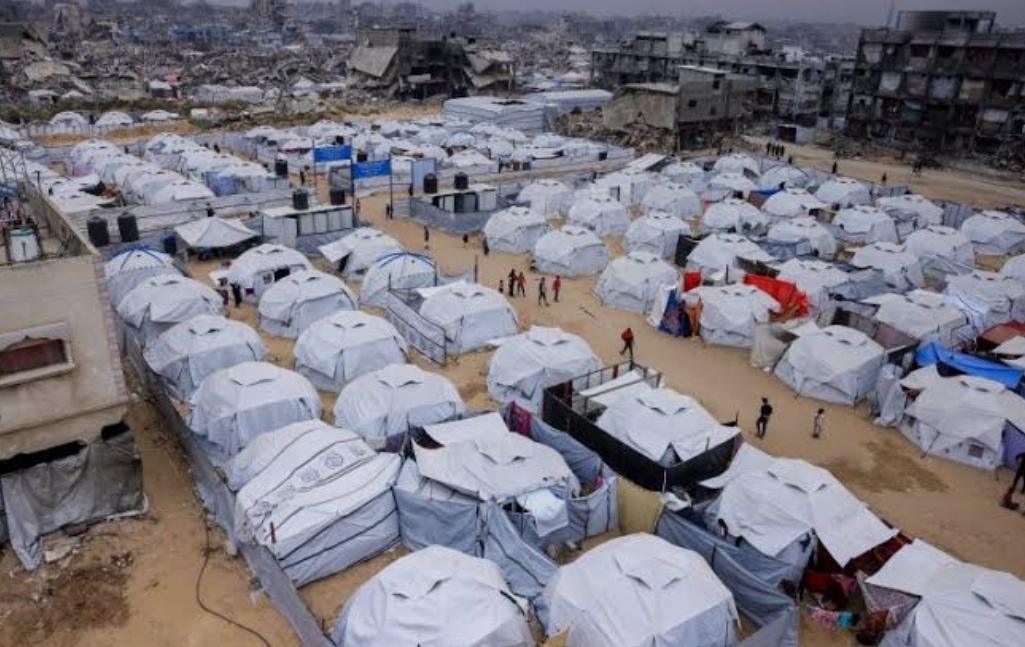
I looked around for a long time, almost waiting for something to tell me that it was still there.
Our home.
Our street.
Our neighbors.
The little details I once thought were ordinary, never realizing how precious they were until they were gone.
Everything looked more like a memory than a life.
Here, there used to be a window.
Here, there used to be a home.
And here, there used to be a dream.
Now, there is rubble. 🧱💔
Memories are buried beneath the stones. Dreams wander barefoot between the tents. Fear has become the ruler of the place.
People no longer ask, “What will I do tomorrow?”
They ask something simpler, and far more painful:
“Will tomorrow come at all?” 🌑
In the city I knew, everyone had a future they imagined.
A child wanted to grow up.
A student wanted to learn.
A mother wanted to see her children safe.
A young person wanted to build a small home and live an ordinary life.
Here, even dreaming has become an act of resistance. 🕊️
Dreaming of sleeping without fear.
Dreaming of a meal whose every bite does not have to be counted.
Dreaming of clean water.
Dreaming of a door you can close behind you and finally feel safe.
Dreaming of returning to your city—not to search for a place to pitch a tent, but to find your home. 🏠💔
Hunger does not knock on the door here.
It has become part of the day.
Deprivation does not come at a certain hour.
It sits beside us, follows our children, and shares our endless waiting.
And yet, there is something the rubble has failed to destroy.
The human being. 🤍
A person can lose their home without losing the ability to remember.
They can lose their place without losing their homeland, because sometimes a homeland survives inside the heart.
A city may be destroyed, but its image remains in memory. And those who lived there carry the responsibility of bearing witness.
I am not writing only about a destroyed city.
I am writing about a life that once existed here.
About people who had names, dreams, plans, homes, and ordinary days.
About children who should have learned what school means before learning what a tent means. 🎒💔
About mothers who should have worried about their children’s future, not about where their next meal would come from.
And about an entire generation forced to become strong simply because it was never given the chance to remain children.
The story does not end at a certain place or time.
War does not always end when the noise stops.
Sometimes another story begins afterward—the story of those who remain, those who carry their memories on their shoulders and walk among the ruins searching for a reason to keep living.
Perhaps the greatest thing we can do now is refuse to let death erase our names, and refuse to let rubble erase our memory. 🕊️
Because when I say that I returned to the City of Tents, I do not mean that I returned to a poor or destroyed place.
I mean I returned to the place that was once my home, and found there a silent witness to everything that happened to us.
And still, I will say:
This is my city.
This is my memory.
This is our life, and it should never have been reduced to rubble. 💔🏚️
We will tell its story for as long as we can.
Because when a human being is deprived of a place to call home, they can still possess their testimony.
And sometimes, a testimony becomes the last home that no one can destroy. 🤍🕊️