Thyme, Heavier Than Hunger 🌿💔
In Palestine, thyme needs no introduction. It is the scent of old homes, the memory of quiet mornings, and a small piece of our land that we carry with us wherever we go. 🇵🇸
We used to eat thyme because we loved it. Today, we eat it because we have little else.
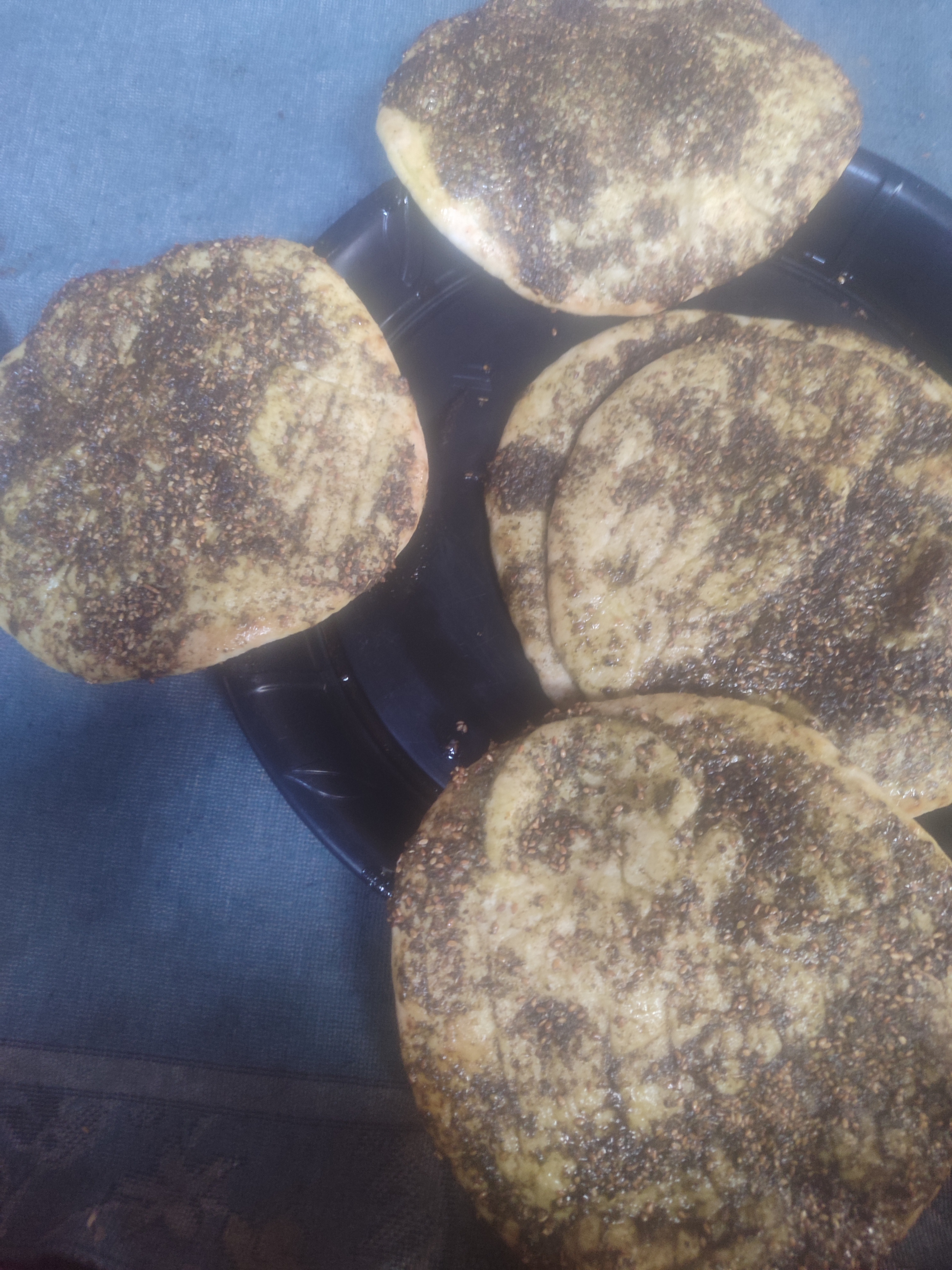
That is the cruel irony: something that once awakened our appetite has become heavy on our stomachs. We eat it today, then again tomorrow, and the day after—not because we want to, but because the only alternative is hunger. 🥖
We spread it on bread, mix it with whatever we have, and try to convince ourselves that the same meal is somehow different. We change its shape, but we know the truth: it is still thyme, and the hunger is still there.
Sometimes I look at the plate and wonder how much our lives have changed.
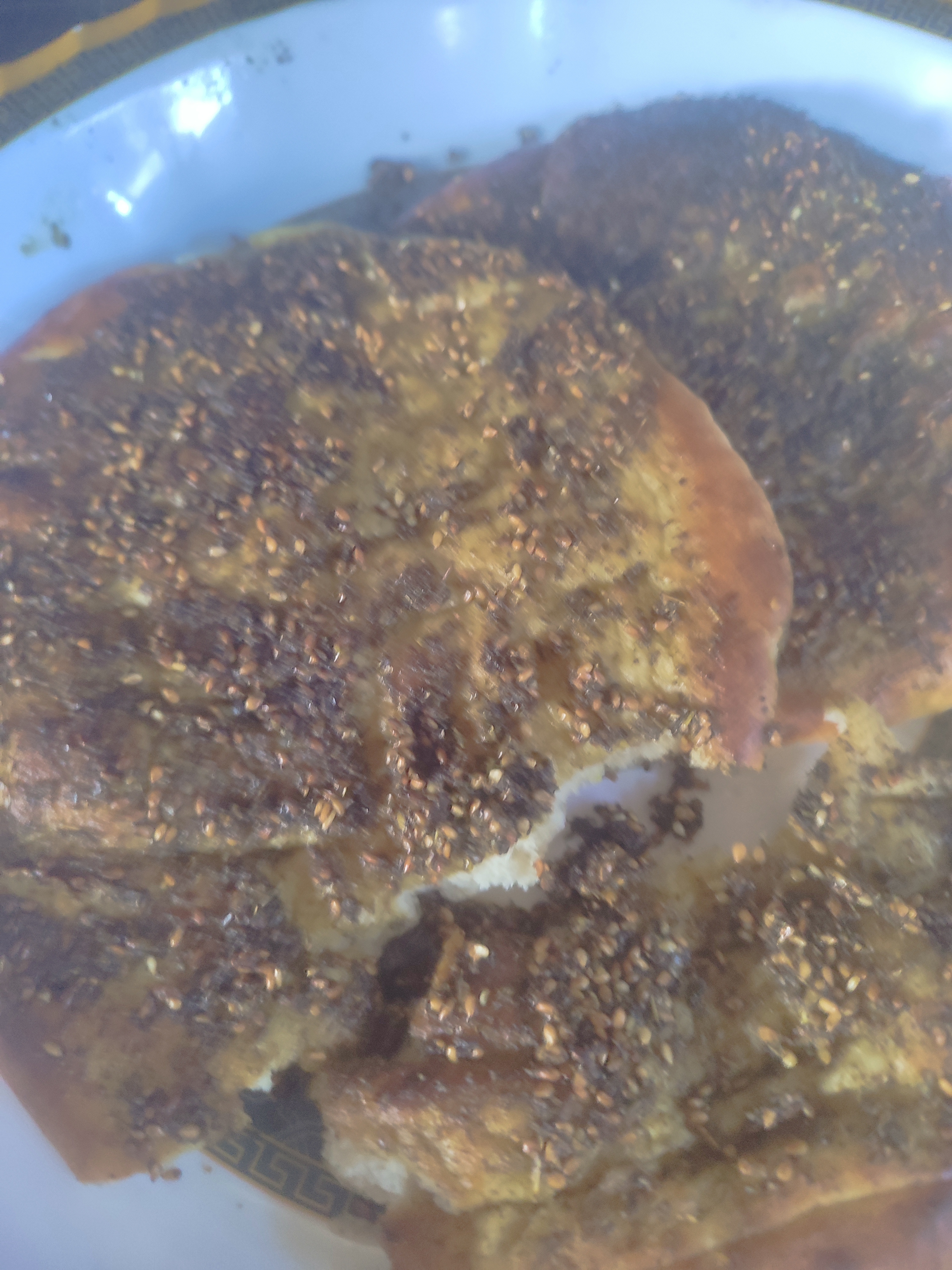
The question is no longer, “What do we feel like eating today?” It has become, “What do we still have to eat today?”
We eat thyme so often that even our stomachs begin to resist what our hearts have learned to accept.
And still, we do not abandon it.
Not because it is enough, but because we no longer have the luxury of choice.
There is an old saying: “Plant it in your belly.” So we plant whatever we can, and keep going.
But sometimes I wonder: what happens when even a memory becomes too heavy for the stomach?
The thyme that once reminded us of our land now reminds us of hunger. 🌿💔
And yet, perhaps that is exactly why we keep eating it. When we cannot hold on to much of Palestine, we hold on to even a spoonful of thyme and tell ourselves that this land still lives inside us.
We eat it so we will not go hungry. We carry it so we will not forget.
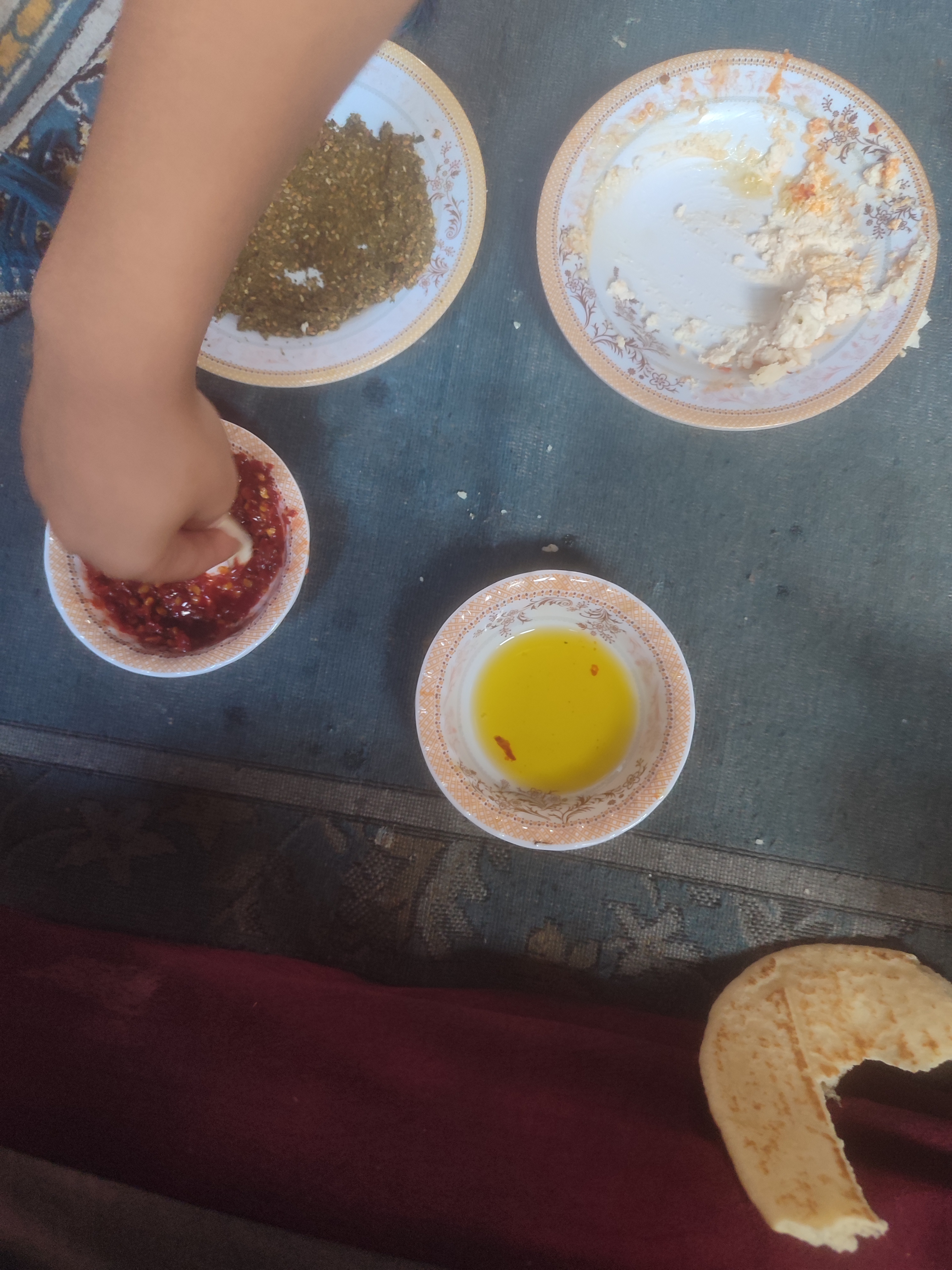
And in both ways, the taste of Palestine remains on our tongues—even when it is mixed with bitterness. 🇵🇸🕊️