Reasons to be cheerful, part three
By: Simon Brooke :: 13 July 2026
I've been pessimistic about the prospects for the people of Gaza. Their enemy has overwhelming force; their current supporters, at an official or military level, almost none.
Israel — or more specifically, Netanyahu — clearly does not want the siege to end, does not want the suffering of the Gazans to end. Netanyahu, I believe, would personally like to adopt the teachings of Samuel and bring about an Endlösung — a final solution — to the Palestinian problem.
But let's count our reasons to be cheerful — about Gaza.
Netanyahu would like to bring about an Endlösung, but he has not done so. The reason he has not done so is because he fears international public opinion. The fact that he fears international public opinion is the first part of my reasons to be cheerful.
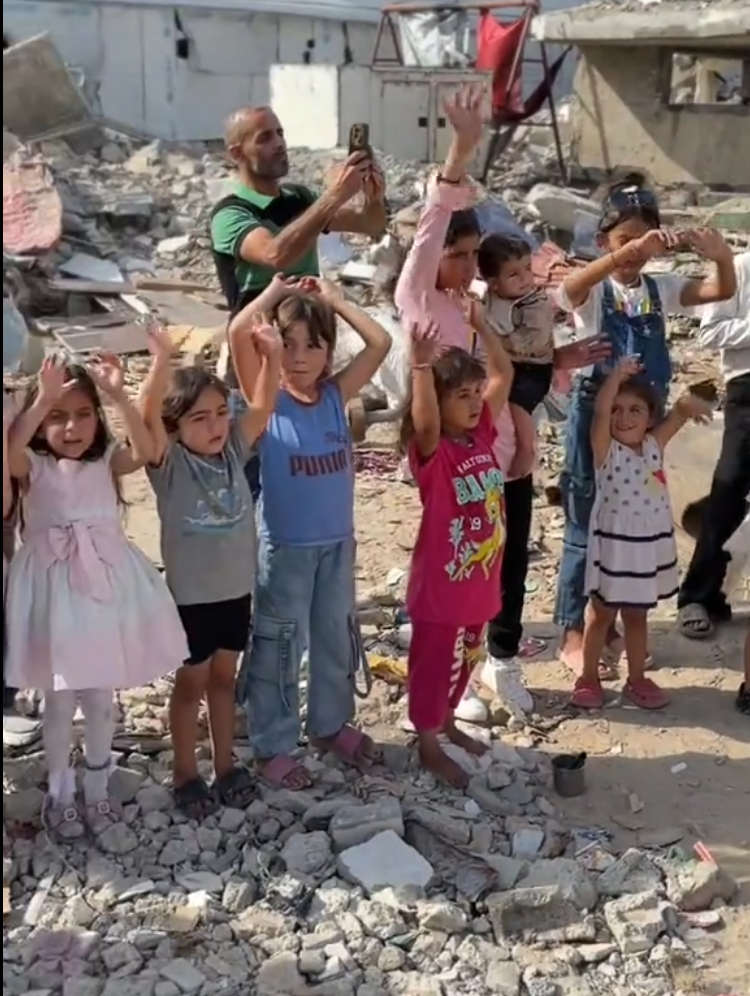
Netanyahu cannot, of course, allow the current war to end, because if the war ends then his electoral coalition may collapse and he would cease to be prime minister. Because he is also a criminal and a fraudster, he is likely to then be tried and imprisoned, if only for fraud and not for genocide. Although he would be unlikely to face the sort of treatment the Israeli prison service meets out to doctors who refuse to abandon their patients, at his age he would nevertheless be at risk of dying in prison.
The fact that Netanyahu's coalition is fragile is the second part of my reasons to be cheerful.

It's not, in itself, a very strong reason to be cheerful. Netanyahu was elected, after all. The people of Israel, knowing his record and his programme, chose to elect him — and his still more thuggish coalition partners — into power. He next faces election in October of this year, but the polls suggest he'll win that, too. It's by no means certain that, when Netanyahu falls, the voters of Israel will choose to replace him with a peacemaker. In fact, it is much more likely that they won't.
But I'm not sure this matters.
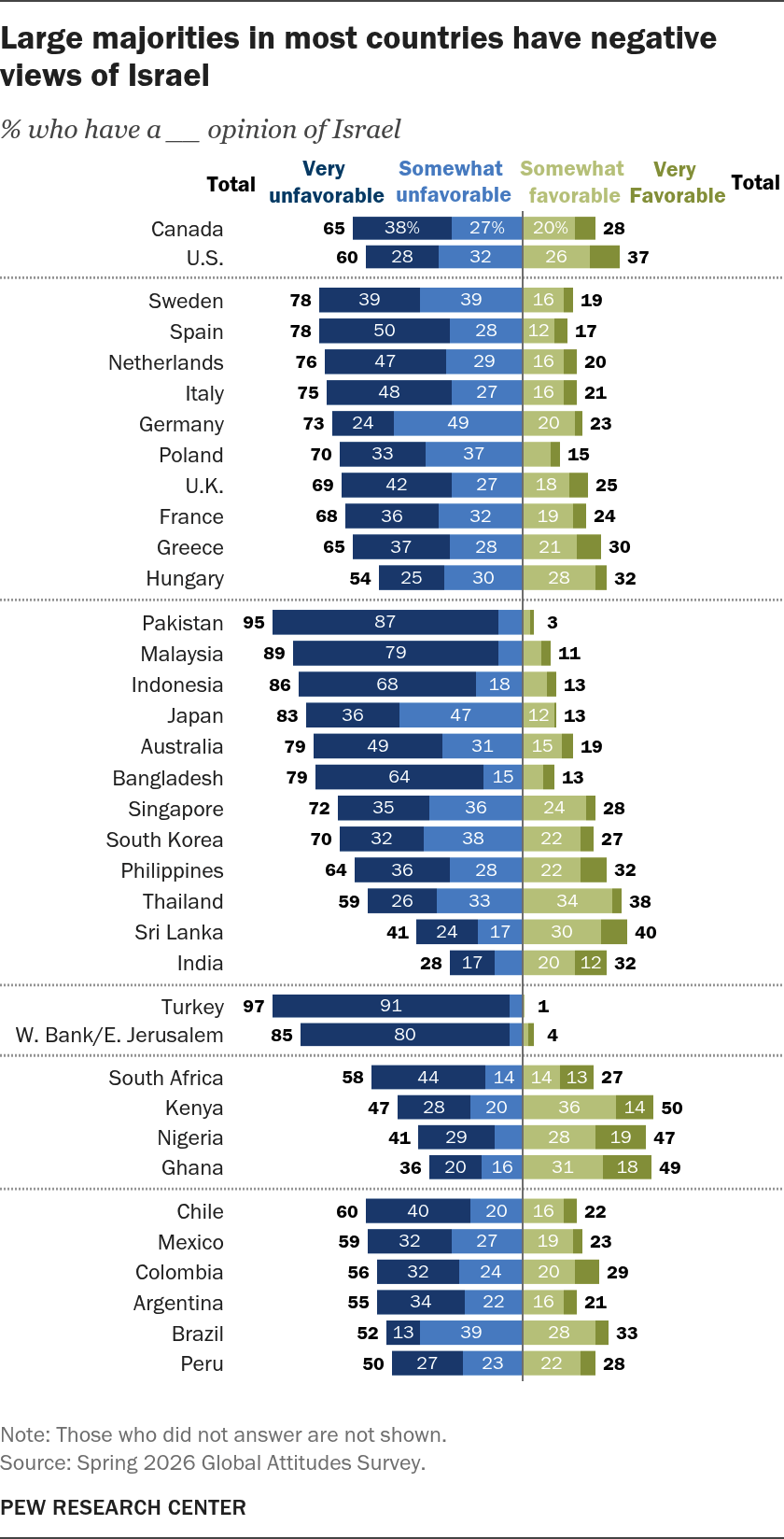
I'm not sure that it matters because Netanyahu is right to fear international public opinion, because international public opinion is shifting fast, and decisively, against him and against Israel.
Why does this matter?
Andy Burnham aspires to become the new Prime Minister of the United Kingdom. As part of his campaign to become Prime Minister, he has chosen to apologise for the Labour party's stance on Gaza. In the United States, Zohran Mamdani made support for Gaza one of the planks of his platform when he campaigned to be mayor of New York, and won. In both countries, public opinion is already strongly against Israel, and is still moving.
The United States is 60-37 against Israel, and holds its midterm elections this November. How many candidates will dare to stand on a pro-Israel platform? How many who stand on a pro-Israel platform will win?
Germany holds its next federal election on 25th March 2029; in recent history it has been Israel's strongest supporter within Europe. But its population is now 73-23 — almost three to one — against Israel, and the trend is still away. Will Germany's politicians still dare to go against the popular will? Will those who do, win?
Indeed there's now no EU country, there's no major European country at all, where support for Israel isn't already negative and falling precipitously. Ireland is now five to one against; Spain and Sweden four to one against; the Netherlands, Italy, Germany and Poland, more than three to one against. Politicians cannot ignore these numbers.
Israel depends on the western democracies for trade, and for military support; Israel's citizens want to be able to travel freely to, and through, western democracies without fearing to be detained. Israel depends, of course, most critically on the United States, which provides it with not only trade and military co-operation, but huge amounts of direct subsidy; and which also protects it in the Security Council of the United Nations, and helps to protect its citizens from prosecution in the International Criminal Court.
As more EU countries switch to supporting Palestine over Israel, the possibility of decisive sanctions on Israel grow. There are a few fairly simple things that countries friendly with Palestine could do which would make things extremely difficult for Israel.
- They could officially recognise the State of Palestine as the sovereign authority over the whole of the West Bank, East Jerusalem (including the Temple Mount) and Gaza. This is a slightly stronger position than merely recognising the State of Palestine;
- They could provide a strong, armed, naval escort for the next Global Sumud Flotilla, with clear orders to protect the flotilla from interception and to ensure the safe landing and distribution of its cargo in Gaza;
- They could set up embassies to Palestine in East Jerusalem, and consulates in Gaza City;
- They could announce clearly that any current or former member of the Most Moral Army in the World arriving on their territory will be immediately detained pending an investigation for war crimes;
- They could invite the State of Palestine to become a member of the North Atlantic Treaty Organisation
- They could sanction and blockade all trade with Israel.
So my third reason to be cheerful is that Netanyahu is right to fear international public opinion, and this one's the kicker.
One, two, three!