The Guardian of Memory
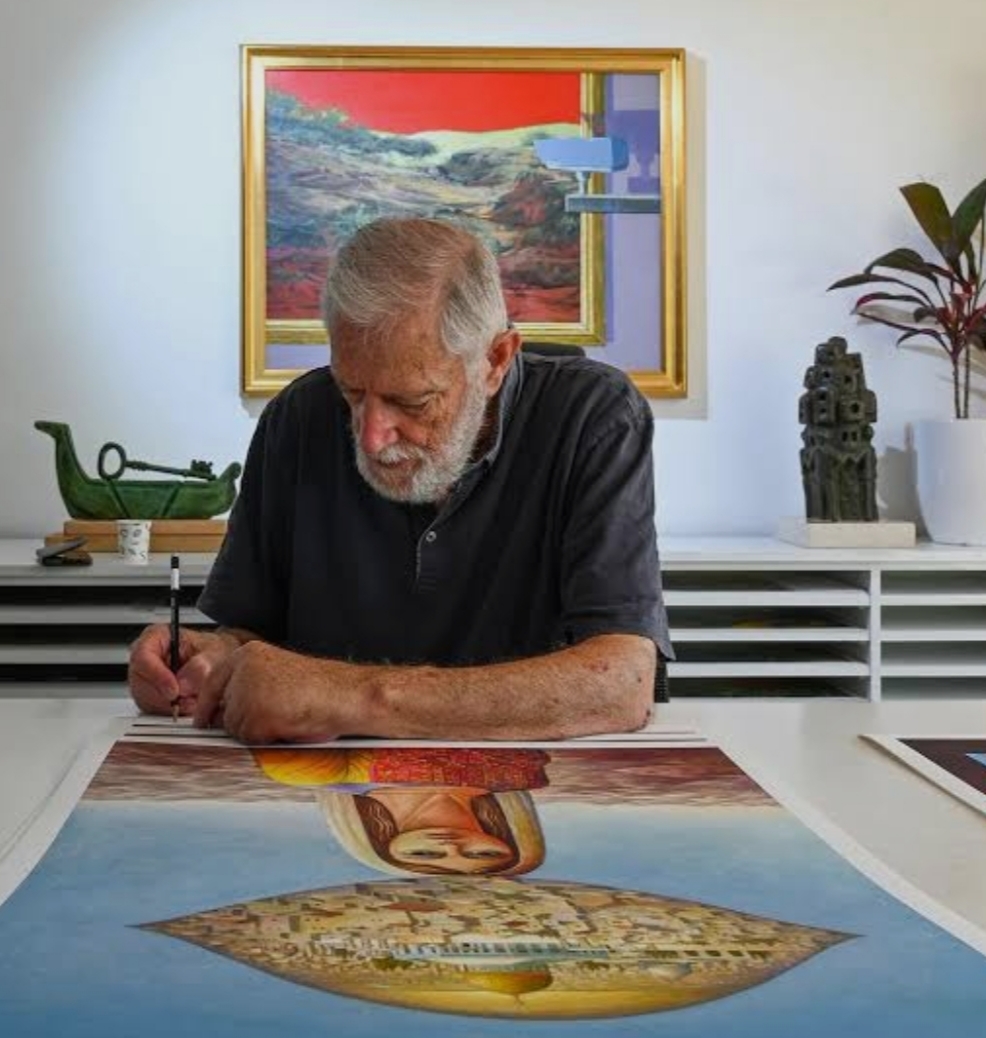
Suleiman Mansour, or as many call him, the Guardian of Memory.
A memory filled with his images and paintings—works that transcended art to become a form of resistance and a symbol of resilience. He was older than the occupation on this land, and therefore his presence was too deep to be confined to its era; he preceded the occupation in memory and will remain after it in art, in the land, and in our collective consciousness. His story was greater than the occupation itself, and his paintings remain rooted in this land like truth—more enduring than its narrative.
From my childhood, I grew up with one of his paintings hanging in our living room. I did not understand much of its meaning then, but it remained deeply embedded in my memory until our home was destroyed and we were displaced from our land. Only then did I begin to understand what that painting had been saying to me all along.
I searched more deeply into Mansour’s work and discovered that his relationship with the land was never merely an artistic subject. He used earth itself as material for his art, as if returning matter to its origin, keeping the land suspended within our souls, our hearts, and our collective consciousness.
Suleiman Mansour brought together beauty and pain, art and memory. He was more than a Palestinian artist; he was a witness to the history of an entire people, a symbol of the human ability to transform loss into meaning, pain into an image, and land into a memory that cannot die.
Even his face carried a story. In the wrinkles of his face, one could read the story of an entire people—from the Nakba to genocide, carrying every detail of displacement, pain, loss, and resilience.
Suleiman Mansour has passed away, but the Guardian of Memory did not leave memory alone. He left it hanging in his paintings, engraved in our collective consciousness, and rooted in this land like a truth that no occupation narrative can erase.
May he rest in peace. And may his memory continue to guard us, just as he once guarded it.