When the Bombing Stopped, but the Fear Remained 🕊️
A diary from Gaza — a testimony of another day of war
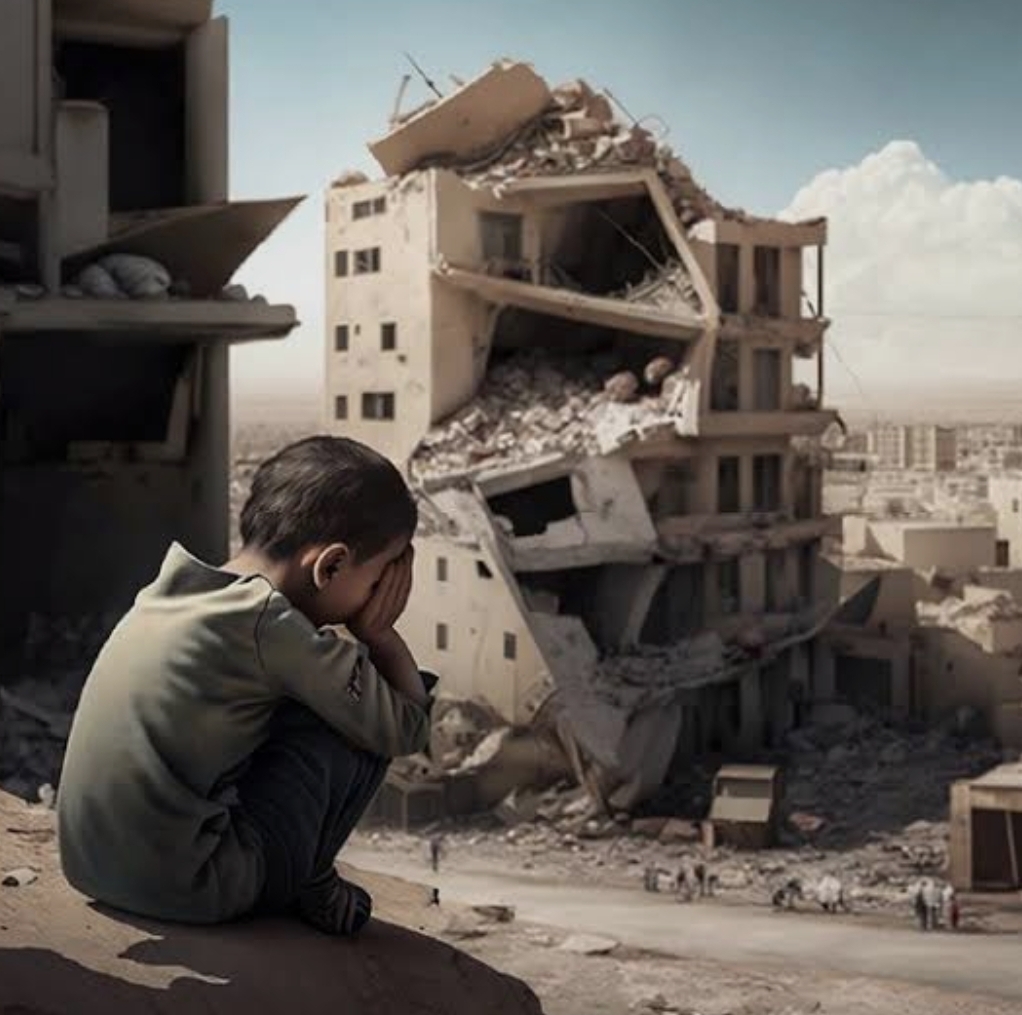
Today, we woke to the sound of war. 💔
It was not an ordinary awakening. We were not woken by the morning light, the movement of people, or someone calling our names. We woke to the sound of heavy gunfire and intense bombardment. The explosions came one after another, frighteningly close, making us feel, for a moment, as though we had suddenly returned to the first days of the war.
We did not know exactly what was happening.
But I did not need to know in order to be afraid.
I opened my eyes, but I did not wake alone.
Fear woke with me.
There was something inside me that I knew very well, although I wish I did not: that first confusion, the racing heart, the instinct to listen to the sky, and the desperate attempt to understand how far away the sound was.
We had no clear picture of what was happening outside.
And yet, our bodies understood the danger before our minds could make sense of it.
Sometimes, all it takes is the sound of a bomb for the body to remember everything.
The memory returns before reason does.
The nights we spent waiting for the worst return. The places we were forced to leave. The sounds we learned by heart without ever wanting to. The faces that became permanently connected to fear.
For more than two and a half years, I have been trying to understand the meaning of one very simple word:
Safety.
I hear it often. I read it in people's words. I see it in the ordinary details of other people's lives.
But sometimes I feel that I have forgotten what it looks like.
What does it feel like to fall asleep knowing you will wake up in the same place?
What does it feel like to hear a loud sound without immediately thinking of bombardment?
What does it feel like when the sound of aircraft disappears from the sky and your ears do not remain waiting for it to return?
Perhaps these are small things to someone who has never lived through war.
But to us, they have become privileges we only notice after they are gone. 🕊️
My brother, you who live in a safe part of this world, perhaps you go to bed at night without wondering whether the sky will wake you.
Perhaps the things that disturb your sleep are a phone screen, the noise of a street, or the alarm clock in the morning.
We sleep with war nearby.
We hear the aircraft.
We hear the explosions.
We hear the gunfire.
And we hear ambulances rushing past, carrying people whose names we do not know, people we may never know. We do not know whether they will return home, or whether the road those ambulances are taking will be their last. 🚑
And sometimes the sounds of war do not remain far away.
They come closer.
So close that the tent itself, or whatever place we are sheltering in, feels like nothing more than a fragile space standing before a force we have no power to stop.
Perhaps some people believe that, with enough time, a person becomes accustomed to fear.
I do not think we have become accustomed to it.
I think we have simply learned how to live beside it.
And there is a great difference between the two.
To become accustomed to something means that it has become normal.
What is happening to us has never become normal.
It has only become familiar.
And perhaps that is the cruelest part of it: when the abnormal becomes part of the daily routine.
You learn to recognize the sounds of bombardment.
You wake up to explosions and your first thought is:
How close was that?
You stop speaking when the gunfire begins.
You become silent after an explosion, not because you have nothing to say, but because you are listening to find out whether another sound will follow.
Today, the sounds grew quieter for a while.
But I did not feel relieved.
I sat listening to the silence in the same way I had listened to the bombardment.
The silence itself carried a question:
Is it over, or is the next sound on its way?
Perhaps this is one of the ways war has changed us.
Even when it stops, we do not know how to stop with it.
The body remains ready to run.
The eyes remain fixed on the sky.
The ears continue searching for danger.
And the heart needs much longer to believe that a moment is truly safe.
I am not writing this today to make my fear into something greater than it is.
I am writing because I am afraid these small details will disappear with time.
I am afraid the world will remember the numbers of the dead and forget the sound of ambulances.
That it will remember the images of destruction and forget the children who learned to sleep with their ears open.
That it will remember the beginning and the end of the war, while forgetting the long days in between — days that may never become headlines, but still happened inside us.
These details matter.
Because war is not only what happens when the bombs fall.
It is also what remains inside people afterward.
A child or a young person in Gaza can wake from sleep terrified without even knowing why.
A period of quiet does not necessarily mean peace.
And a person who has lived for years beneath the sound of war may continue hearing it inside themselves, even after the sky becomes quiet.
Tonight, perhaps the streets will become quieter.
Perhaps the sky will remain silent for a while.
But silence is no longer something we can easily trust.
For those who have lived through war, even quiet can carry the memory of an explosion.
And sometimes the hardest part is not the moment when the danger arrives.
It is learning how to believe, again, that you are safe. 🕊️