The Only Survivor 🕊️
There are around 500 children in our camp.
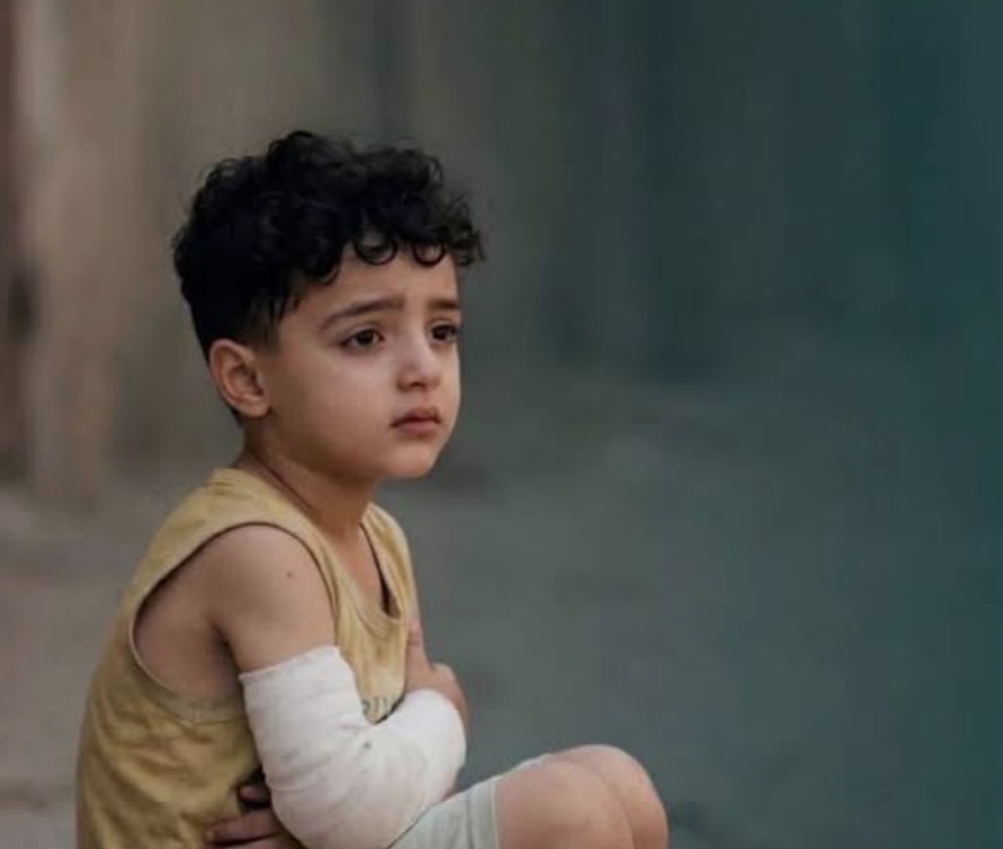
When I say that number, everything sounds simple: 500 children, 500 lives, 500 stories that have not yet been fully written.
But war does not see children that way. War turns human beings into numbers—and then tries to convince the world that numbers are enough.
One of the cruellest phrases this genocide has taught us is:
“The only survivor.”
In a world far from here, “survivor” may sound like the most hopeful word imaginable.
Here, sometimes, it is one of the most painful.
Because the only survivor is a child. 🧒🏻
A child who never chose to be brave. A child who never asked to survive.
He survived because the others did not.
And this is the tragedy that is almost impossible to explain to someone who has never seen it: to be alive while the people who were supposed to be your entire world are gone.
No mother.
No father.
No brother or sister.
No grandparent.
No relative waiting to hold you when you are afraid.
No one who remembers how you used to sleep, what food you liked, what made you laugh, or the name your mother used to call you. 💔
Even your memories become orphaned.
When this child becomes sick, there is no mother placing a hand on his forehead to feel his fever.
No father carrying him to a hospital.
No sibling sitting beside him.
There is only a sick child, and a world asking him to be strong.
But what does it mean to ask a child to be strong after taking away everyone who once gave him strength?
When he is hungry, there may be no one searching for a piece of bread for him.
When he is afraid, there may be no one saying, “I am here.”
And when he goes to school, there may be no one waiting for him at the door.
When he comes home, no one asks:
“How was your day?” 🕊️
Perhaps this is why I have come to understand that genocide does not kill a person only once.
It kills them when the bomb falls.
Then again when their mother is taken away.
Again when their father is gone.
Again when they search for their brother and cannot find him.
Again when they become sick and there is no one to care for them.
Again when they are hungry and there is no one to feed them.
Again when they lie down at night and there is no chest against which they can rest their head.
And then the world asks us to call them “survivors.”
What kind of survival is that?
A body remains alive, while the world that gave that life meaning has been erased.
I can no longer look at the “only survivor” as a lucky child.
He is a living witness.
A witness that genocide cannot be measured only by the number of bodies.
It must also be measured by the number of children left without mothers, without fathers, without homes, without anyone to reach for them when they need a hand the most. 🫂
Historians may one day record how many people were killed.
They may record how many homes were destroyed.
How many schools and hospitals were erased from existence.
But who will write about the child who survived, only to spend the rest of his childhood searching for his mother’s face in strangers?
Who will write about his tiny hand reaching into the darkness at night for a hand that is no longer there?
Who will tell the world that some children did not merely lose their families?
They lost their entire world.
I write because I fear that one day these tragedies will become nothing more than numbers in a history book.
And I do not want this child to become a number.
He had a name.
He had a mother.
He had a father.
He had a home.
He had a life he deserved to live.
Then the war came.
And he became known as:
“The only survivor.” 💔
But I want to call him something else.
He is not simply the only survivor.
He is the child who survived to bear witness to those who did not.
And that is more than survival.
It is the responsibility of memory. 🕯️
Because when we document what happened, we are not writing only about the dead.
We are trying to save those who remain from a second death:
the death of being forgotten. 🕊️