Bondage Safety: or, how (not) to kill your partner
By: Simon Brooke :: 18 December 2021
Bondage Safety: or, how (not) to kill your partner
Content warning: This is about rope bondage. I'm normally fairly shy about talking about my weird sexuality on my public blog, and I published this note some years ago in more private parts of the web where odd people hang out. If rope bondage isn't your bag, do not read on.
What we're doing, in modern western societies, when we play with rope, is fundamentally an artistic, or a meditative, or — very often — an erotic practice. Rope hasn't often, historically, been used in this way. Historically, people have mostly been tied by people hostile to them: by people who were their enemies, who didn't care, greatly, about their safety or wellbeing. Indeed, tying has often been a part of intentional torture, or a way to deliberately kill — usually slowly.
Playing with rope is dangerous. It is quite easy to permanently injure, or to kill, someone with rope. In modern western rope play, we don't want to do that. We're playing with people who are at least friends, very often lovers. We want to enhance their well-being; we want to give them positive experiences. So this lesson is about how to kill, how to permanently injure, how to harm — not because I'm presuming you want to do that but because I'm presuming you want to avoid it.
This all comes down to basic physiology. In order to survive, even in the short term, the human body needs to be able to do several things.
Breath and blood
It needs to be able to breathe, which means airways need to be kept clear and the chest needs to be able to expand. Which means neither should be unduly constricted.
It needs to be able to circulate blood, most critically to the brain and major organs but actually any significant restriction of blood flow anywhere for any significant time will cause harm. For circulation to happen, blood vessels — both those (arteries) carrying oxygen from the chest and those (veins) returning carbon dioxide, lactic acid and other waste products from the muscles and organs — must flow freely. Which means they must not be unduly constricted.
Both of these points are critical: both can kill, extremely quickly.
But there are a lot of other ways the body can be injured by the application of rope, or by the uncontrolled removal of it.
Nerves
Control signals are passed round the body by nerves. These are quite delicate structures of remarkably long cells called neurons protected physically and electrically by sheaths of myelin, which is basically fat. The neurons are delicate and the myelin is squishy. Also, the myelin sheath is not continuous; because or the way it is constructed, there are necessarily very short gaps between sections. In simple terms, if you unduly compress a nerve, you risk displacing the myelin causing neutrons that should not touch each other to touch each other. This causes short circuits, and the short circuits cause both motor control problems, and long lasting pain. This can be long term or even permanent damage.
Tendons
Parts of our bodies need to move with considerable strength and fine control in places where bulky muscles would be in the way. So the muscles needed to provide that strength and control are put somewhere else in the body and linked to the bits that need to move by tendons (also called sinews), which are essentially ropes. These ropes run through grooves in bones which function very much like pulleys. Thus, the muscles which power and control the movement of your fingers are mostly not in your hands at all, they're in your forearms, and linked to the bones in your fingers by tendons. Those tendon pass through your wrists and the palms of your hands — mostly but not entirely through the insides of your wrists. Similar tendons control the movement of the bones in your feet which enable you to stand upright and to walk, and those pass through your ankles; and again, tendons passing through your neck control the poise of your skull, which is quite heavy!
Tendons are bundles of collagen — protein — fibres. The bundle of fibres are contained in a sheath, the paratenon, which is essentially membranous. They contain only very small proportions of elastic material, which means they're basically not very stretchy. If you put too much tensile strain on them, you'll break them, and that's a major injury.
That, however, is not the primary problem in bondage. The problem in bondage is that if you put too much lateral pressure on them, your may bruise them or cause damage to the sheath. Either will cause swelling, which will mean the tendons won't run smoothly through their pulleys, which will cause lasting pain and inflammation, and also prevent the effective movement of the part of the body (finger, toe, skull) to which they are attached. Again, this can be lasting damage.
Areas of risk
So it's important to know where veins, nerves and tendons run, and, especially, where they're vulnerable to damage. Fortunately, or perhaps inevitably, these are mostly the same places. The body is evolved to protect itself from damage, so wherever it's possible to do so these things tend to be well protected. But at joints, especially, it isn't easy to protect things. The bones take up the centre of the joint, and everything else needs to be routed around them.
Fundamentally the places you need to be aware of are, in descending order of importance, the neck, the chest, the wrists, the ankles, the elbows and knees, the armpits and groin. There are a few other places where injury can be caused, which I'll also note.
Neck
The neck critically affects breath, blood circulation, nerves and tendons. Generally, the windpipe (breath) is at the front, the veins and arteries at the sides, the tendons at the corners. A rope — a ligature — around the neck can cause quite rapid loss of consciousness, and death. The simplest safety rule here is just don't tie anything tightly around the neck, or, indeed, so that it can compress the sides of the neck.
However, breathplay is an erotic practice. Limiting a partner's ability to breathe, in carefully controlled ways, for a short time, can for some people increase erotic pleasure. But this is very much at your own risk, and you should also be aware that apart from ordinary sorts of bondage injury it's also possible to crush the larynx, which is a cartilaginous structure, and that's not a good thing to do either.
Chest
The first thing about tying the chest is not to tie it so tightly that you obstruct its ability to expand, for the person tied to take a breath. That's reasonably obvious, but if you're suspending by a chest harness, which is often convenient, be aware that the harness may tighten as stress comes on it.
Two other things are less obvious. Breasts are essentially structures of fats and glands and are quite delicate. You will often see pictures of people with breasts bound so tightly that they become congested with blood — dark red or purple coloured. That worries the hell out of me. I don't know that it's harmful, but I suspect that it may be. I avoid such ties and I'd advise you to, too.
Another point on the chest: the lowermost two pairs of ribs are not attached to the breastbone, but are 'floating'. Putting too much stress on them can displace them, which is a long term injury. Avoid ties which might do this.
Wrists
There are a lot of tendons and nerves passing through the wrists, especially on the inner sides. Also, of course, the blood to the hand passes through the wrist. Any damage to any of these things may cause loss of function in the hand, and hands are really important.
Basically never tie anything tightly around a single wrist. Also, don't tie any rope tightly so that it compresses the inner side of a wrist. Tying two wrists together so that the rope only touches the outer side of the wrist is safer, but still don't do it too tightly. The traditional manrope knot — traditionally used by the Royal Navy, among others, as extemporary handcuffs — should not be considered safe, and, indeed, anything else which forms a figure of eight around the wrists should never be done tightly. You need to be able to get at least one finger of your own under the ropes; otherwise it's too tight.
Fortunately hands are bigger than wrists, so a rope which is slightly loose on the wrist will not allow the hand to pass through.
I would not now suspend anyone from wrist ties alone. I have in the past suspended an extremely light woman just from her wrists, and got away with it — she wasn't harmed — but I would now think it unacceptably risky.
Ankles
Ankles are slightly less vulnerable than wrists but not much. Damage to nerves or tendons in the ankles would cause difficulty in walking and balance. I've never seen this happen, but nevertheless I would be wary about rope tied tightly around the ankle.
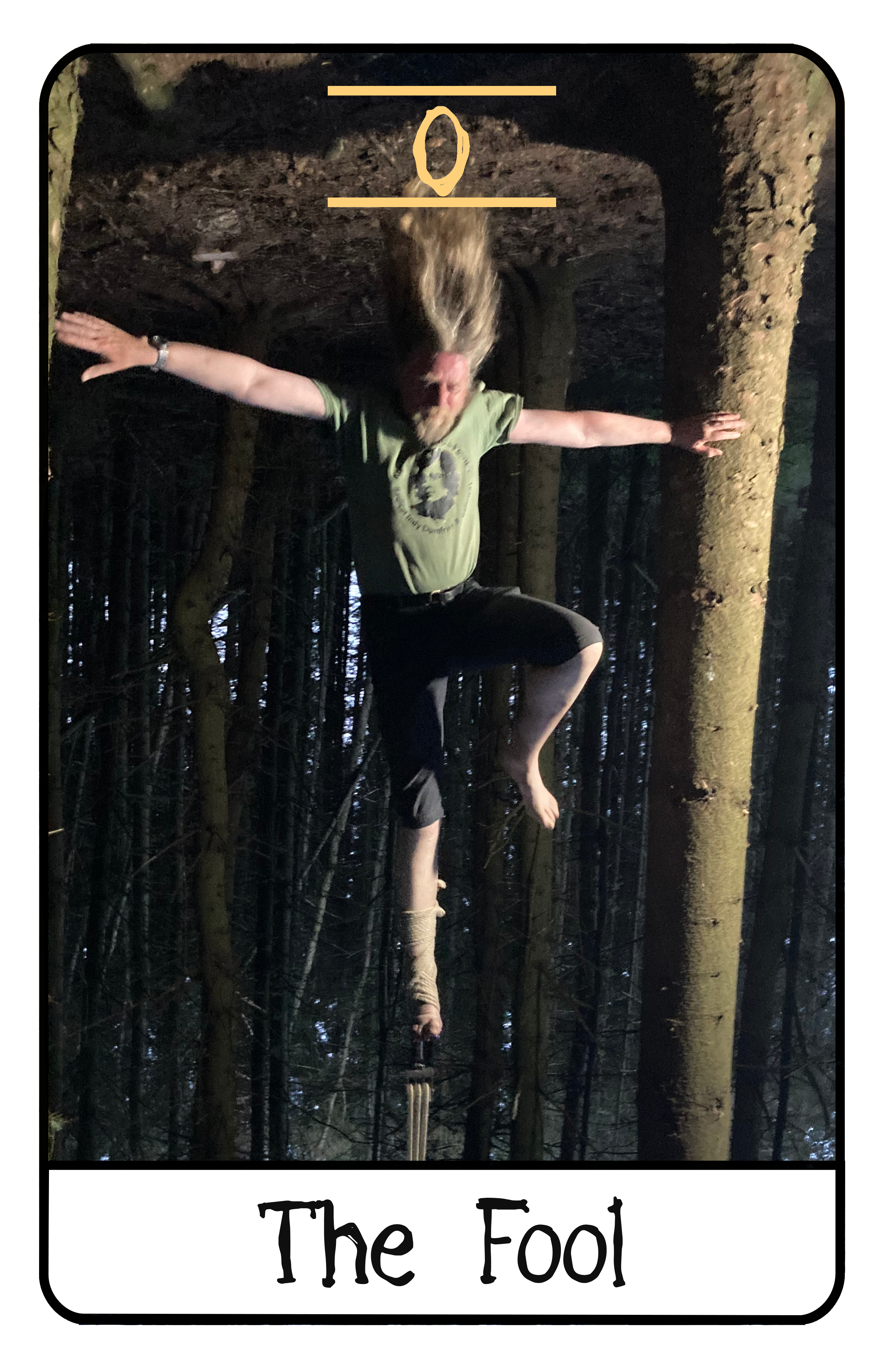
I have a lot of experience with the Jesus Sandal tie, which in my opinion is safe (as well as being simple to do, and elegant). It's sufficiently safe that I have been suspended with it by one ankle, and I've suspended a lot of other people; I've never suspended anyone else of my own weight by just one ankle, but most people under 60Kg who have not suffered hip or knee dislocations should be safe to suspend from one ankle.
Elbows and Knees
Elbows and knees are very similar structures, and similar considerations apply. Firstly, the nerves and veins pass mainly though the inside of the joint (i.e. the side it flexes towards), although important tendons run over the outside.
This means two things: firstly, don't tie anything tightly around the elbow or knee directly, just as you wouldn't round a wrist. But secondly, tight flexion of an elbow or knee directly can result in compression of arteries and/or veins, leading to failure of blood circulation. This is not a reason never to tightly flex the elbow or knee -- after all, the classic futomomo tie does exactly this. But be aware.
Groin and Armpits
Major arteries and veins run through the groin into the thighs. Anything tied tightly around the top of the inside of the thigh, close to the groin, will cause compression of these vessels and will interfere with blood circulation in the legs. The same is true of arms, but the temptation to tie tightly around the extreme top of the arm is less.
Also be aware that both armpit and groin areas have quite a number of lymph nodes. I understand these less well and consequently don't know the risks associated with putting pressure on them, so I treat that as yet another reason to be cautious.
Danger signs
People in rope space can get very blissed out and much less responsive than they would normally be, and this is not necessarily a danger sign. But do be aware of breathing, pulse and consciousness. Failure of any of those things would be a reason to stop what you're doing, get them untied and into a recovery position immediately. I don't want to worry you too much here: I've never seen anyone lose consciousness in rope, or stop breathing, or have heart failure. It's not at all likely. But it could happen, and if it did happen it would be very serious.
Beyond that, things to watch for generally are discolouration: dark red, maroon or purple colours indicate compression of the veins, pallor indicates compression of the arteries, either is bad and should be a reason for untying.
Tingling and/or pins-and-needles is indicative of risk of incipient nerve damage, and again, can be a reason to re-evaluate and probably to immediately untie.
Pain is also a thing to be aware of. Some of the things you do in bondage are going to be painful, but you should have some idea of how painful they ought to be and if the person tied is experiencing unexpected levels of pain, that too should be treated as an important warning sign.
Leverage
The final thing you need to be aware of — at least before we start hoisting people off the ground — is leverage. Again, the body is generally very strong and resists injury, but you can use limbs as leverage and it's possible to cause serious injury by doing so.
In particular, Strappado — tying someone's wrists together behind their backs and then lifting them by their tied wrists — is extremely dangerous for this reason. If someone is lifted onto tiptoe in this manner for an extended period — as little as half an hour — they may die. If someone is lifted entirely off their feet in this manner it is extremely likely to dislocate both their shoulders.
I don't know of any other leverage-related ties which are especially dangerous, but there are likely to be some. Essentially, if the person tied is experiencing significant pain, you should treat that as a warning. Dislocation is a significant injury: although it can be treated, it's likely to cause permanent weakness in the joint.
Knots, untying and falls
In what follows I want to make a clear distinction between knots which lock on themselves and can be difficult to untie, and simple wraps which don't lock and can simply be unwrapped.
Japanese traditions of rope work use very few actual locking knots. This is generally a good thing because it means that in emergency the rope can be got off quickly and easily, and consequently it's worth studying.
But, especially if you're suspending people, and especially if you're inverting them, you need to be very sure that they won't fall. It takes a remarkably short head-first fall to kill someone. Therefore, I think that it's important to have some reliable, easy to tie, secure, non-jamming, non-slipping knots that you can tie and untie from muscle memory.
I suggest you learn at least:
- the bowline — a secure general purpose loop which won't slip and is always easy to untie;
- the sheet bend — similar to the bowline, so it you know one the other is easy to remember, but joins two ropes end to end. More secure if one rope has a permanent eye splice in the end;
- round turn and two half hitches — probably the best way of fastening a rope to a strong point, and won't jam, but I wouldn't use it on a limb as it may tighten;
- the clove hitch — a very quick way of fastening a rope to a beam or bar, strong against pulls at right angles to the beam or bar but less strong against pulls along the axis of the beam or bar, don't use on a limb as it will tighten;
- the Somerville bowline — the most commonly used knot for a single column tie (and very often just called the single column tie), it won't slip, won't jam and is easy to untie, is it is reasonably safe to use on limbs (although of course not too tight!)
Rope strong enough to be used for bondage — especially rope strong enough to be used for suspension — is tough and is not easy to cut, especially if under tension. Also, cutting a rope leads to uncontrolled release of tension, which may in itself cause injury or if the person is suspended, a fall. For these reasons, although you should have a cutting instrument — ideally blunt ended dressing scissors — with you, I treat this as a last resort and always prefer to untie than to cut.
Other kinetic issues
It's pretty obvious that if someone is suspended from a single rope, and you cut or carelessly untie that single rope, they're going to fall. What can be less obvious is that if someone is suspended from two ropes and you cut or carelessly untie one of them, they're going to swing, and depending on the angle of the suspension point with respect to their centre of mass, they may swing with high acceleration and considerable amplitude. Is there anything in the way that they might smash into?
Suspension
It is possible to suspend someone from a single rope; I do it myself, frequently. But you need to be very sure of the strength of
- the suspension point;
- the rope itself;
- the harness that you've tied.
Generally, it's better to use more than one upline, and more than one suspension point, so that if one fails the person suspended doesn't fall. But that's not as simple as it seems, because you need to be sure that if one rope did fail, the transfer of load onto the other rope wouldn't in itself cause injury — see 'other kinetic issues', above.
I generally prefer to use synthetic ropes for uplines, because they deteriorate less rapidly and because deterioration is more visible; and for a given diameter, they're stronger. I load test my suspension points, lift tackles and uplines with at least three times the weight I intend to suspend.
Things to ask the person you're tying before you start
Dislocations
If someone has ever had a dislocation of any joint, you do not want to stress the limb involved. So ask them: have you ever dislocated anything? If so, what? If they have had dislocations of multiple joints, treat them with especial caution as they probably dislocate unusually easily.
Circulation problems, dizziness, fainting
If someone has circulation problems, or is prone to dizziness or fainting, you need to think about whether you want to be responsible for tying them at all. So, again, ask them. If you do want to, there's nothing especial to avoid, but you should be much more careful, especially with inversions. It's even more important to have a clear strategy for how to get them down and into recovery position quickly.
Conclusion
I'm sure that's not all the safety issues that you should bear in mind when doing bondage, but it is all the ones that are in my mind just now, and I think it covers all the important ones.
Bondage is beautiful, it's intimate, it is about trust, it can be extremely erotic. It's also risky, and it's often part of the experience for the person tied to feel that risk. But if you care about the person you're tying -- and I assume you do -- part of the role of the rigger is to minimise that risk as much as possible.
Tags: Safety