Dear John
By: Simon Brooke :: 10 June 2026
'Dear John' is always an ominous opening to a letter; and so indeed it is now.
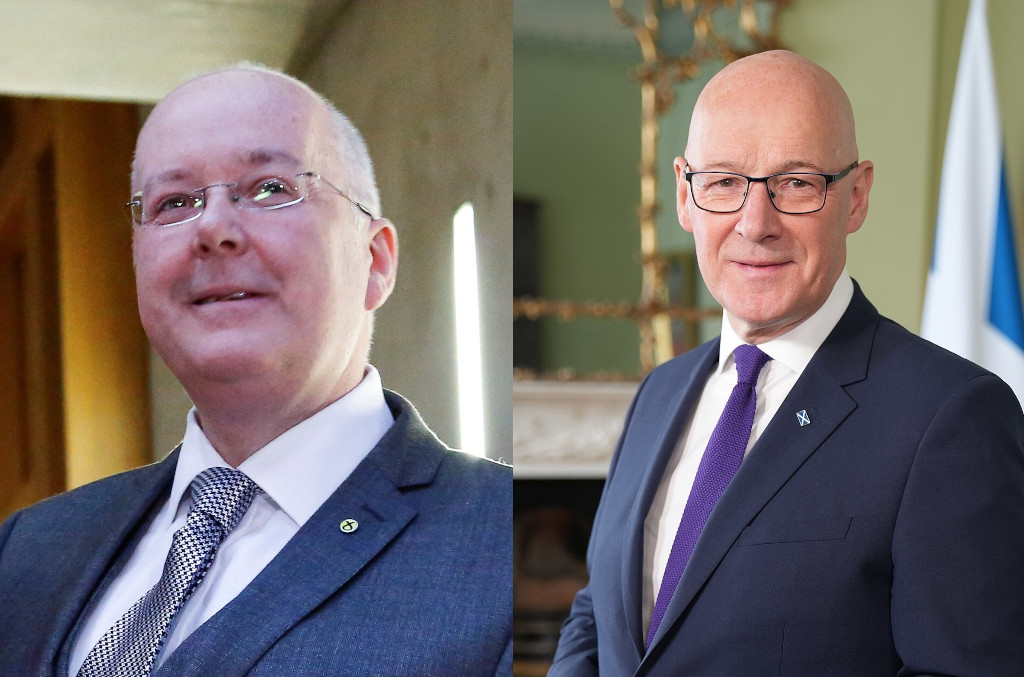
You wrote in Saturday's National on how the SNP can regain 'our' trust. To whom your message is addressed is not entirely clear, but given the readership of The National I am going to suppose you are addressing, not the kitchen cabinet of the SNP, but the Yes movement as a whole. And if that is so, then this is not enough.
First, I should say, I'm no longer a member of the SNP. I was from 1979 until 2008. My disillusionment was over exactly the issues that lead to the present crisis: over centralisation, secrecy, disrespect of members and internal structures, lax attitude to accounting rules, and disregard of policy chosen by the members at conference.
You say that Peter Murrell is a criminal, and that the party is his victim. Yes, of course, indeed you're right; but the wider Yes movement is also his victim. He stole two thirds of the value of the independence war chest from the SNP, but the SNP had first appropriated that, along with the 'Yes Scotland' branding, the website, and Yes Scotland's data assets, from the wider movement. And the SNP has proven that it has not been a good custodian of any part of the movement's assets.
You say that Peter Murrell is a criminal. He was; no one seeks to deny it. But who appointed that criminal to be Chief Executive of the party? Strictly speaking, I don't remember. But I mind well who was leader of the SNP when he was appointed; and I do feel that that leader should acknowledge some of the responsibility for that appointment. Who was that leader? One John Ramsay Swinney, as it happens.
Murrell was not then an unknown outsider to the party. Quite the contrary. He was on the staff, successively, of Alex Salmond, Allan Macartney, and Ian Hudghton, before his appointment as chief executive. He was weel ken't; his personality, if not his kleptomania, were known.
An aside: is it possible to have a coercive-controlling relationship with someone who is head of government of a country? On the face of it, it seems unlikely. I don't know. I suspect Peter Murrell does. I'm also worried by the psychology of a man giving his wife an apparently thoughtful — even romantic — gift bought with money stolen from the party to which she'd dedicated her life; particularly as he could definitely have afforded that particular gift out of his own earnings. It feels to me that there's something very dark and manipulative going on there.
You say that, to prevent a repeat of Murrell's malfeasance, you've instituted a policy that every invoice must go across the desks of three people who at least ought already to be extremely busy. So, if this procedure is followed scrupulously, it becomes an onerous bureaucratic burden; and if not followed scrupulously, it becomes meaningless. Have you also instituted a policy which would both hear and protect whistleblowers within the organisation, whether staff or members?
You say, I repeat, rhetorically, that Peter Murrell was a criminal. Indeed, that's true. But that's not the deepest harm he's done either to the party or the movement. The culture of arrogance, unaccountability, uncollegiality, secrecy — wheesht for indy — which to be fair to him already existed in the SNP's then rather chaotic headquarters before he took the reins but which he undoubtedly aggravated, have cost us far more than four hundred thousand pounds.
They've cost us ten years as an independent nation. They've cost us our place in the EU.
You go on to say
we have an open and transparent culture within the SNP through policy debates on our strategy and good internal scrutiny at National Council and at the National Executive Committee
We've all heard recently from Tommy Sheppard, who, fortunately, still is a member of the party. and from Mhairi Black, who very sadly isn't, about the working culture of the National Executive Committee; and consequently your words offer little comfort.
The SNP led the last referendum campaign without much heed to the wider movement, and it lost it. It lost it because it had not prepared adequately, because it published a white paper without compelling vision, because it had no coherent policy on currency, and because it campaigned on the right while the majority for independence is on the left. It lost it, most of all, because it would not co-operate fully with allies: with Women for Independence, with the National Collective, with the Radical Independence Campaign; with the Green Party and the Scottish Socialist Party.
The SNP raised a fighting fund for the next referendum campaign from the wider movement, and it spent it. The claim that the actions of the SNP over the past twelve years have advanced the cause of independence one iota does not merit discussion. Nicola Sturgeon, admittedly, lead a moderately conscientious administration, and I do not believe for a moment that she was in any sense an accomplice in her husband's crimes. But it is beyond question that she was complicit in the secrecy and control freakery within the SNP, and it was under her watch that the deeply unpatriotic 'Both Votes SNP' policy, which you to your shame have continued, and which has reduced the size of the pro-independence majority at Holyrood at every election since the referendum, was instituted.
Humza Youssaf was, I feel, an undervalued and underrated leader, but he made a critical mistake in ending cooperation with the Greens, and he, too, sadly, has left the stage.
But after this catalogue of failure, the movement cannot trust the SNP to lead the next independence campaign. We certainly cannot trust the SNP to hold funds for that campaign. The question, in my mind, is whether we should allow the SNP even to participate in it.
You boast about your 'it's Scotland's energy' campaign, which is just yet another example of the SNP bypassing existing, effective, grass roots campaigning to reinvent wheels with your usual arrogant not invented here approach. And you do so while completely ignoring the ScotWind scandal, which occurred while you were both Depute First Minister and Cabinet Secretary for Finance and the Economy. This will not do.
The polls do indeed, as you say, now show a majority for independence. But I think that you will concede that, like your own recent election victory, that is not a consequence of the success of the SNP so much as it is a reflection of the failure of the UK's parties of the centre.
In summary, to regain trust, Scotland's National Party must engage with Scotland's civic society and with the Yes movement not as some self appointed primus inter pares, but as the sinner which repenteth and which begs readmission into the body of the kirk. You cannot sit back on your laurels and claim that the trust of the movement has been regained, because those same laurels are looking fair awfy withered.
You might suppose, from what I have written above, that I would end this letter by calling for your resignation. I shall not do so; but I shall not do so only because I do not see within the SNP's present Holyrood team anyone whose leadership of Scotland would give me confidence. And your resignation would by no means be sufficient. There's a whole Ship of Theseus to clean.
Sincerely
Simon Brooke